
Engineered and Built in the USA
(800) 862-2875

3-Phase-Monitors
Showing 17–32 of 213 resultsSorted by latest
-
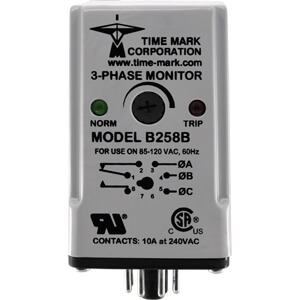
B258B
The Model 258 continuously monitors 3-phase power lines for abnormal conditions. When properly adjusted, the Model 258 monitor will detect phase loss on a loaded motor even when regenerated voltage is present.This device consists of a solid-state voltage and phase-angle sensing circuit, driving an electromechanical relay. When correct voltage and phase rotation are applied, the internal relay will energize. A fault condition will de-energize the relay. When the fault is corrected, the monitor will automatically reset (a manual reset version is also available).
The Model 258 does not require a neutral connection and can be used with Wye or Delta systems. Voltage ranges are sufficiently wide to allow for proper adjustment to existing conditions. Both TRIP and NORM condition indicators are provided to aid in adjustment and system trouble-shooting.
-
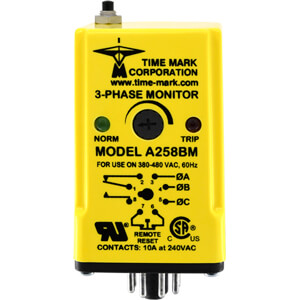
A258BM
The Model 258 continuously monitors 3-phase power lines for abnormal conditions. When properly adjusted, the Model 258 monitor will detect phase loss on a loaded motor even when regenerated voltage is present.This device consists of a solid-state voltage and phase-angle sensing circuit, driving an electromechanical relay. When correct voltage and phase rotation are applied, the internal relay will energize. A fault condition will de-energize the relay. When the fault is corrected, the monitor will automatically reset (a manual reset version is also available).
The Model 258 does not require a neutral connection and can be used with Wye or Delta systems. Voltage ranges are sufficiently wide to allow for proper adjustment to existing conditions. Both TRIP and NORM condition indicators are provided to aid in adjustment and system trouble-shooting.
-
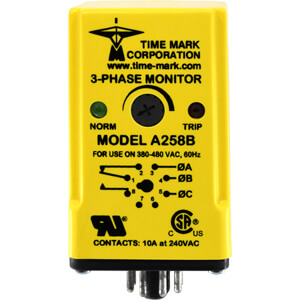
A258B
The Model 258 continuously monitors 3-phase power lines for abnormal conditions. When properly adjusted, the Model 258 monitor will detect phase loss on a loaded motor even when regenerated voltage is present.This device consists of a solid-state voltage and phase-angle sensing circuit, driving an electromechanical relay. When correct voltage and phase rotation are applied, the internal relay will energize. A fault condition will de-energize the relay. When the fault is corrected, the monitor will automatically reset (a manual reset version is also available).
The Model 258 does not require a neutral connection and can be used with Wye or Delta systems. Voltage ranges are sufficiently wide to allow for proper adjustment to existing conditions. Both TRIP and NORM condition indicators are provided to aid in adjustment and system trouble-shooting.
-
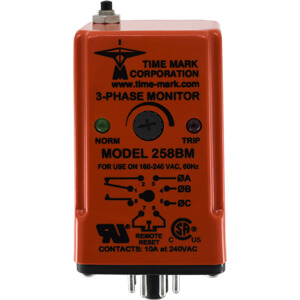
258BM-400HZ
The Model 258 continuously monitors 3-phase power lines for abnormal conditions. When properly adjusted, the Model 258 monitor will detect phase loss on a loaded motor even when regenerated voltage is present.This device consists of a solid-state voltage and phase-angle sensing circuit, driving an electromechanical relay. When correct voltage and phase rotation are applied, the internal relay will energize. A fault condition will de-energize the relay. When the fault is corrected, the monitor will automatically reset (a manual reset version is also available).
The Model 258 does not require a neutral connection and can be used with Wye or Delta systems. Voltage ranges are sufficiently wide to allow for proper adjustment to existing conditions. Both TRIP and NORM condition indicators are provided to aid in adjustment and system trouble-shooting.
-
258BM
The Model 258 continuously monitors 3-phase power lines for abnormal conditions. When properly adjusted, the Model 258 monitor will detect phase loss on a loaded motor even when regenerated voltage is present.This device consists of a solid-state voltage and phase-angle sensing circuit, driving an electromechanical relay. When correct voltage and phase rotation are applied, the internal relay will energize. A fault condition will de-energize the relay. When the fault is corrected, the monitor will automatically reset (a manual reset version is also available).
The Model 258 does not require a neutral connection and can be used with Wye or Delta systems. Voltage ranges are sufficiently wide to allow for proper adjustment to existing conditions. Both TRIP and NORM condition indicators are provided to aid in adjustment and system trouble-shooting.
-
258B-400HZ
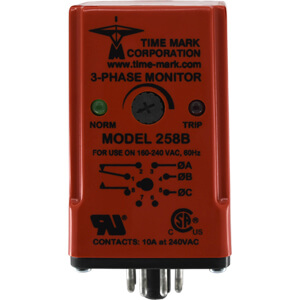
The Model 258 continuously monitors 3-phase power lines for abnormal conditions. When properly adjusted, the Model 258 monitor will detect phase loss on a loaded motor even when regenerated voltage is present.This device consists of a solid-state voltage and phase-angle sensing circuit, driving an electromechanical relay. When correct voltage and phase rotation are applied, the internal relay will energize. A fault condition will de-energize the relay. When the fault is corrected, the monitor will automatically reset (a manual reset version is also available).
The Model 258 does not require a neutral connection and can be used with Wye or Delta systems. Voltage ranges are sufficiently wide to allow for proper adjustment to existing conditions. Both TRIP and NORM condition indicators are provided to aid in adjustment and system trouble-shooting.
-
258B
The Model 258 continuously monitors 3-phase power lines for abnormal conditions. When properly adjusted, the Model 258 monitor will detect phase loss on a loaded motor even when regenerated voltage is present.This device consists of a solid-state voltage and phase-angle sensing circuit, driving an electromechanical relay. When correct voltage and phase rotation are applied, the internal relay will energize. A fault condition will de-energize the relay. When the fault is corrected, the monitor will automatically reset (a manual reset version is also available).
The Model 258 does not require a neutral connection and can be used with Wye or Delta systems. Voltage ranges are sufficiently wide to allow for proper adjustment to existing conditions. Both TRIP and NORM condition indicators are provided to aid in adjustment and system trouble-shooting.
-
EX246
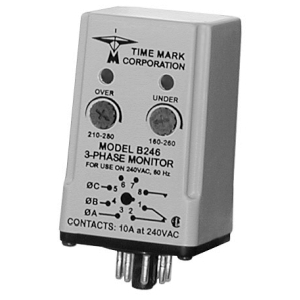
The Model 246 3-Phase Monitor is designed to continuously monitor 3-phase power lines for abnormal conditions. This device features solid-state voltage and phase angle sensing circuits, which drive a SPDT electromechanical relay.A neutral is not required, allowing the Model 246 to be used with either Wye or Delta systems.
Three versions of the Model 246 cover the 120 and 208/240 VAC, 60Hz and the 380 VAC, 50Hz ranges. In addition, the models A246 and B246 are now CSA Certified.
Each option on the Model 246 monitor is adjustable throughout its operating range. The adjustment pots and LED indicators of OVER VOLTAGE and UNDER VOLTAGE are mounted on the front of the unit, for easy access.
-
B246
The Model 246 3-Phase Monitor is designed to continuously monitor 3-phase power lines for abnormal conditions. This device features solid-state voltage and phase angle sensing circuits, which drive a SPDT electromechanical relay.A neutral is not required, allowing the Model 246 to be used with either Wye or Delta systems.
Three versions of the Model 246 cover the 120 and 208/240 VAC, 60Hz and the 380 VAC, 50Hz ranges. In addition, the models A246 and B246 are now CSA Certified.
Each option on the Model 246 monitor is adjustable throughout its operating range. The adjustment pots and LED indicators of OVER VOLTAGE and UNDER VOLTAGE are mounted on the front of the unit, for easy access.
-
A246
The Model 246 3-Phase Monitor is designed to continuously monitor 3-phase power lines for abnormal conditions. This device features solid-state voltage and phase angle sensing circuits, which drive a SPDT electromechanical relay.A neutral is not required, allowing the Model 246 to be used with either Wye or Delta systems.
Three versions of the Model 246 cover the 120 and 208/240 VAC, 60Hz and the 380 VAC, 50Hz ranges. In addition, the models A246 and B246 are now CSA Certified.
Each option on the Model 246 monitor is adjustable throughout its operating range. The adjustment pots and LED indicators of OVER VOLTAGE and UNDER VOLTAGE are mounted on the front of the unit, for easy access.
-
52901-02
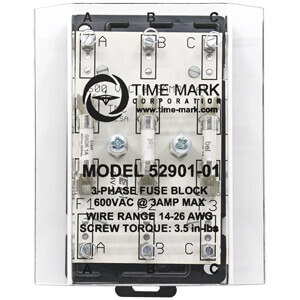
The fuse block is designed to provide fuse protection for low current (<3 Amp) 600VAC devices. Time Mark fuse blocks will accept 20mm or 32mm ceramic fuses for maximum flexibility. The fuse block includes three 20mm 1A fuses installed plus two spare fuses (SKU: 520078). Time Mark fuse blocks are available with screw terminals (-01) or FASTON 0.187 terminals (-02). -
52901-01
The fuse block is designed to provide fuse protection for low current (<3 Amp) 600VAC devices. Time Mark fuse blocks will accept 20mm or 32mm ceramic fuses for maximum flexibility. The fuse block includes three 20mm 1A fuses installed plus two spare fuses (SKU: 520078). Time Mark fuse blocks are available with screw terminals (-01) or FASTON 0.187 terminals (-02). -
EX269R
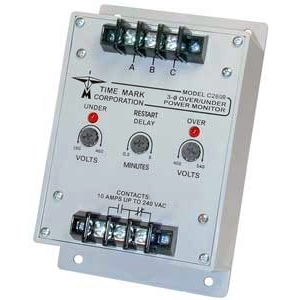
The Model 269R Over & Under 3-Phase Monitor continuously monitors 3-phase lines for high voltage, low voltage, phase loss or phase reversal, and an adjustable . 3 – 5 minute restart delay. This device features a solid-state voltage and phase angle sensing circuit, which drives a SPDT output relay.The Model 269R is independent of the system load, and may be used on any horsepower motor. When phase sequence is correct, and the voltage remains between the upper and lower trip points, the output relay remains energized. When a fault condition is sensed, the output relay drops out.
The Model 269R does not require a neutral connection, and can be used on Wye or Delta systems. Each of the four voltage versions can be adjusted over a wide range. An adjustable restart delay (0.3-5 minutes) allows compressor head pressures to bleed off, in the event of short-term power failures. OVER and UNDER voltage failure indicators aid in cali bration and system troubleshooting.
-
C269R
The Model 269R Over & Under 3-Phase Monitor continuously monitors 3-phase lines for high voltage, low voltage, phase loss or phase reversal, and an adjustable . 3 – 5 minute restart delay. This device features a solid-state voltage and phase angle sensing circuit, which drives a SPDT output relay.The Model 269R is independent of the system load, and may be used on any horsepower motor. When phase sequence is correct, and the voltage remains between the upper and lower trip points, the output relay remains energized. When a fault condition is sensed, the output relay drops out.
The Model 269R does not require a neutral connection, and can be used on Wye or Delta systems. Each of the four voltage versions can be adjusted over a wide range. An adjustable restart delay (0.3-5 minutes) allows compressor head pressures to bleed off, in the event of short-term power failures. OVER and UNDER voltage failure indicators aid in cali bration and system troubleshooting.
-
B269R
The Model 269R Over & Under 3-Phase Monitor continuously monitors 3-phase lines for high voltage, low voltage, phase loss or phase reversal, and an adjustable . 3 – 5 minute restart delay. This device features a solid-state voltage and phase angle sensing circuit, which drives a SPDT output relay.The Model 269R is independent of the system load, and may be used on any horsepower motor. When phase sequence is correct, and the voltage remains between the upper and lower trip points, the output relay remains energized. When a fault condition is sensed, the output relay drops out.
The Model 269R does not require a neutral connection, and can be used on Wye or Delta systems. Each of the four voltage versions can be adjusted over a wide range. An adjustable restart delay (0.3-5 minutes) allows compressor head pressures to bleed off, in the event of short-term power failures. OVER and UNDER voltage failure indicators aid in cali bration and system troubleshooting.
-
A269R
The Model 269R Over & Under 3-Phase Monitor continuously monitors 3-phase lines for high voltage, low voltage, phase loss or phase reversal, and an adjustable . 3 – 5 minute restart delay. This device features a solid-state voltage and phase angle sensing circuit, which drives a SPDT output relay.The Model 269R is independent of the system load, and may be used on any horsepower motor. When phase sequence is correct, and the voltage remains between the upper and lower trip points, the output relay remains energized. When a fault condition is sensed, the output relay drops out.
The Model 269R does not require a neutral connection, and can be used on Wye or Delta systems. Each of the four voltage versions can be adjusted over a wide range. An adjustable restart delay (0.3-5 minutes) allows compressor head pressures to bleed off, in the event of short-term power failures. OVER and UNDER voltage failure indicators aid in cali bration and system troubleshooting.