
Engineered and Built in the USA
(800) 862-2875

3-Phase-Monitors
Showing 129–144 of 213 resultsSorted by latest
-
B263
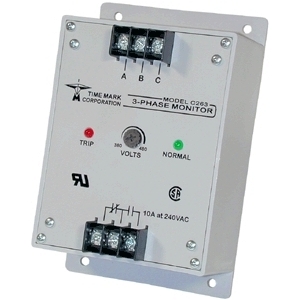
The Model 263 continuously monitors 3-phase power systems for phase loss, low voltage and phase reversal. The monitor consists of a solid-state sensing circuit, driving an electromechanical relay.Applying correct voltage and phase rotation energizes the relay. When properly adjusted, a fault condition will cause the relay to de-energize, even when regenerated voltage is present.
When the fault is corrected, the Model 263 automatically resets. A manual reset version and an option for gold-plated contacts are also available.
The Model 263 does not require a neutral connection, and can be used on Wye or Delta systems. Each of the five different voltage ranges is adjustable to allow the monitor to be set for existing conditions. NORMAL and TRIP LED indicators are provided to aid in adjustment and system troubleshooting.
-
A263SGM
The Model 263 continuously monitors 3-phase power systems for phase loss, low voltage and phase reversal. The monitor consists of a solid-state sensing circuit, driving an electromechanical relay.Applying correct voltage and phase rotation energizes the relay. When properly adjusted, a fault condition will cause the relay to de-energize, even when regenerated voltage is present.
When the fault is corrected, the Model 263 automatically resets. A manual reset version and an option for gold-plated contacts are also available.
The Model 263 does not require a neutral connection, and can be used on Wye or Delta systems. Each of the five different voltage ranges is adjustable to allow the monitor to be set for existing conditions. NORMAL and TRIP LED indicators are provided to aid in adjustment and system troubleshooting.
-
A263SG
The Model 263 continuously monitors 3-phase power systems for phase loss, low voltage and phase reversal. The monitor consists of a solid-state sensing circuit, driving an electromechanical relay.Applying correct voltage and phase rotation energizes the relay. When properly adjusted, a fault condition will cause the relay to de-energize, even when regenerated voltage is present.
When the fault is corrected, the Model 263 automatically resets. A manual reset version and an option for gold-plated contacts are also available.
The Model 263 does not require a neutral connection, and can be used on Wye or Delta systems. Each of the five different voltage ranges is adjustable to allow the monitor to be set for existing conditions. NORMAL and TRIP LED indicators are provided to aid in adjustment and system troubleshooting.
-
A263M
The Model 263 continuously monitors 3-phase power systems for phase loss, low voltage and phase reversal. The monitor consists of a solid-state sensing circuit, driving an electromechanical relay.Applying correct voltage and phase rotation energizes the relay. When properly adjusted, a fault condition will cause the relay to de-energize, even when regenerated voltage is present.
When the fault is corrected, the Model 263 automatically resets. A manual reset version and an option for gold-plated contacts are also available.
The Model 263 does not require a neutral connection, and can be used on Wye or Delta systems. Each of the five different voltage ranges is adjustable to allow the monitor to be set for existing conditions. NORMAL and TRIP LED indicators are provided to aid in adjustment and system troubleshooting.
-
A263
The Model 263 continuously monitors 3-phase power systems for phase loss, low voltage and phase reversal. The monitor consists of a solid-state sensing circuit, driving an electromechanical relay.Applying correct voltage and phase rotation energizes the relay. When properly adjusted, a fault condition will cause the relay to de-energize, even when regenerated voltage is present.
When the fault is corrected, the Model 263 automatically resets. A manual reset version and an option for gold-plated contacts are also available.
The Model 263 does not require a neutral connection, and can be used on Wye or Delta systems. Each of the five different voltage ranges is adjustable to allow the monitor to be set for existing conditions. NORMAL and TRIP LED indicators are provided to aid in adjustment and system troubleshooting.
-
EX259
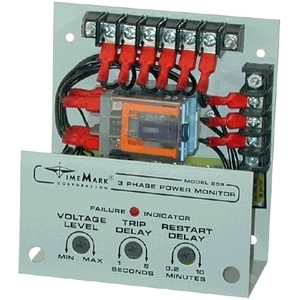
The Model 259 3-Phase Monitor is designed to protect individual 3-phase equipment and motors, or in conjunction with shunt trip breakers. When correct voltage and phase rotation is applied, an internal DPDT relay energizes.A fault condition (phase loss, phase reversal, or low voltage) drops out the relay and lights the LED failure indicator. The Model 259 will detect a phase loss condition even when regenerative voltage is present.
The Model 259 may be used with Wye or Delta systems and requires no neutral connection. Standard operating ranges are available from 120 to 575 VAC, 60Hz and 380 VAC, 50Hz
-
D259
The Model 259 3-Phase Monitor is designed to protect individual 3-phase equipment and motors, or in conjunction with shunt trip breakers. When correct voltage and phase rotation is applied, an internal DPDT relay energizes.A fault condition (phase loss, phase reversal, or low voltage) drops out the relay and lights the LED failure indicator. The Model 259 will detect a phase loss condition even when regenerative voltage is present.
The Model 259 may be used with Wye or Delta systems and requires no neutral connection. Standard operating ranges are available from 120 to 575 VAC, 60Hz and 380 VAC, 50Hz
-
C259
The Model 259 3-Phase Monitor is designed to protect individual 3-phase equipment and motors, or in conjunction with shunt trip breakers. When correct voltage and phase rotation is applied, an internal DPDT relay energizes.A fault condition (phase loss, phase reversal, or low voltage) drops out the relay and lights the LED failure indicator. The Model 259 will detect a phase loss condition even when regenerative voltage is present.
The Model 259 may be used with Wye or Delta systems and requires no neutral connection. Standard operating ranges are available from 120 to 575 VAC, 60Hz and 380 VAC, 50Hz
-
B259
The Model 259 3-Phase Monitor is designed to protect individual 3-phase equipment and motors, or in conjunction with shunt trip breakers. When correct voltage and phase rotation is applied, an internal DPDT relay energizes.A fault condition (phase loss, phase reversal, or low voltage) drops out the relay and lights the LED failure indicator. The Model 259 will detect a phase loss condition even when regenerative voltage is present.
The Model 259 may be used with Wye or Delta systems and requires no neutral connection. Standard operating ranges are available from 120 to 575 VAC, 60Hz and 380 VAC, 50Hz
-
A259
The Model 259 3-Phase Monitor is designed to protect individual 3-phase equipment and motors, or in conjunction with shunt trip breakers. When correct voltage and phase rotation is applied, an internal DPDT relay energizes.A fault condition (phase loss, phase reversal, or low voltage) drops out the relay and lights the LED failure indicator. The Model 259 will detect a phase loss condition even when regenerative voltage is present.
The Model 259 may be used with Wye or Delta systems and requires no neutral connection. Standard operating ranges are available from 120 to 575 VAC, 60Hz and 380 VAC, 50Hz
-
A257BM-400HZ
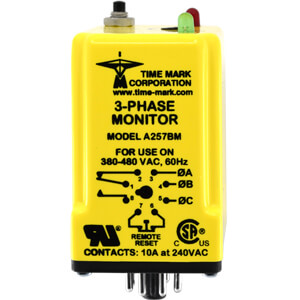
The Model 257 continuously monitors 3-phase power lines for abnormal conditions. When properly adjusted, the Model 257 monitor will detect phase loss on a loaded motor even when regenerated voltage is present.This device consists of a solid-state voltage and phase-angle sensing circuit, driving an electromechanical relay. When correct voltage and phase rotation are applied, the internal relay will energize. A fault condition will de-energize the relay. When the fault is corrected, the monitor will automatically reset (a manual reset version is also available).
The Model 257 does not require a neutral connection and can be used with Wye or Delta systems. Voltage ranges are sufficiently wide to allow for proper adjustment to existing conditions. Both TRIP and NORM condition indicators are provided to aid in adjustment and system trouble-shooting.
-
A257B-400HZ
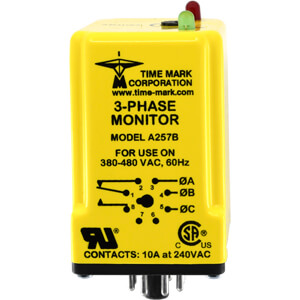
The Model 257 continuously monitors 3-phase power lines for abnormal conditions. When properly adjusted, the Model 257 monitor will detect phase loss on a loaded motor even when regenerated voltage is present.This device consists of a solid-state voltage and phase-angle sensing circuit, driving an electromechanical relay. When correct voltage and phase rotation are applied, the internal relay will energize. A fault condition will de-energize the relay. When the fault is corrected, the monitor will automatically reset (a manual reset version is also available).
The Model 257 does not require a neutral connection and can be used with Wye or Delta systems. Voltage ranges are sufficiently wide to allow for proper adjustment to existing conditions. Both TRIP and NORM condition indicators are provided to aid in adjustment and system trouble-shooting.
-
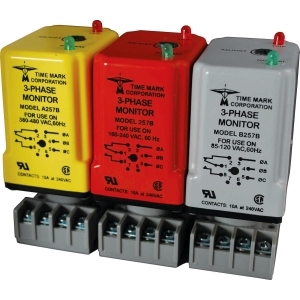
EX257BM-415V/50HZ
The Model 257 continuously monitors 3-phase power lines for abnormal conditions. When properly adjusted, the Model 257 monitor will detect phase loss on a loaded motor even when regenerated voltage is present.This device consists of a solid-state voltage and phase-angle sensing circuit, driving an electromechanical relay. When correct voltage and phase rotation are applied, the internal relay will energize. A fault condition will de-energize the relay. When the fault is corrected, the monitor will automatically reset (a manual reset version is also available).
The Model 257 does not require a neutral connection and can be used with Wye or Delta systems. Voltage ranges are sufficiently wide to allow for proper adjustment to existing conditions. Both TRIP and NORM condition indicators are provided to aid in adjustment and system trouble-shooting.
-
EX257BM
The Model 257 continuously monitors 3-phase power lines for abnormal conditions. When properly adjusted, the Model 257 monitor will detect phase loss on a loaded motor even when regenerated voltage is present.This device consists of a solid-state voltage and phase-angle sensing circuit, driving an electromechanical relay. When correct voltage and phase rotation are applied, the internal relay will energize. A fault condition will de-energize the relay. When the fault is corrected, the monitor will automatically reset (a manual reset version is also available).
The Model 257 does not require a neutral connection and can be used with Wye or Delta systems. Voltage ranges are sufficiently wide to allow for proper adjustment to existing conditions. Both TRIP and NORM condition indicators are provided to aid in adjustment and system trouble-shooting.
-
EX257B-415V/50HZ
The Model 257 continuously monitors 3-phase power lines for abnormal conditions. When properly adjusted, the Model 257 monitor will detect phase loss on a loaded motor even when regenerated voltage is present.This device consists of a solid-state voltage and phase-angle sensing circuit, driving an electromechanical relay. When correct voltage and phase rotation are applied, the internal relay will energize. A fault condition will de-energize the relay. When the fault is corrected, the monitor will automatically reset (a manual reset version is also available).
The Model 257 does not require a neutral connection and can be used with Wye or Delta systems. Voltage ranges are sufficiently wide to allow for proper adjustment to existing conditions. Both TRIP and NORM condition indicators are provided to aid in adjustment and system trouble-shooting.
-
EX257B
The Model 257 continuously monitors 3-phase power lines for abnormal conditions. When properly adjusted, the Model 257 monitor will detect phase loss on a loaded motor even when regenerated voltage is present.This device consists of a solid-state voltage and phase-angle sensing circuit, driving an electromechanical relay. When correct voltage and phase rotation are applied, the internal relay will energize. A fault condition will de-energize the relay. When the fault is corrected, the monitor will automatically reset (a manual reset version is also available).
The Model 257 does not require a neutral connection and can be used with Wye or Delta systems. Voltage ranges are sufficiently wide to allow for proper adjustment to existing conditions. Both TRIP and NORM condition indicators are provided to aid in adjustment and system trouble-shooting.